
.svg)

Jaguar Ecology 101: The Predator, the Prey, and the Pulse of the Pantanal
August 30, 2022
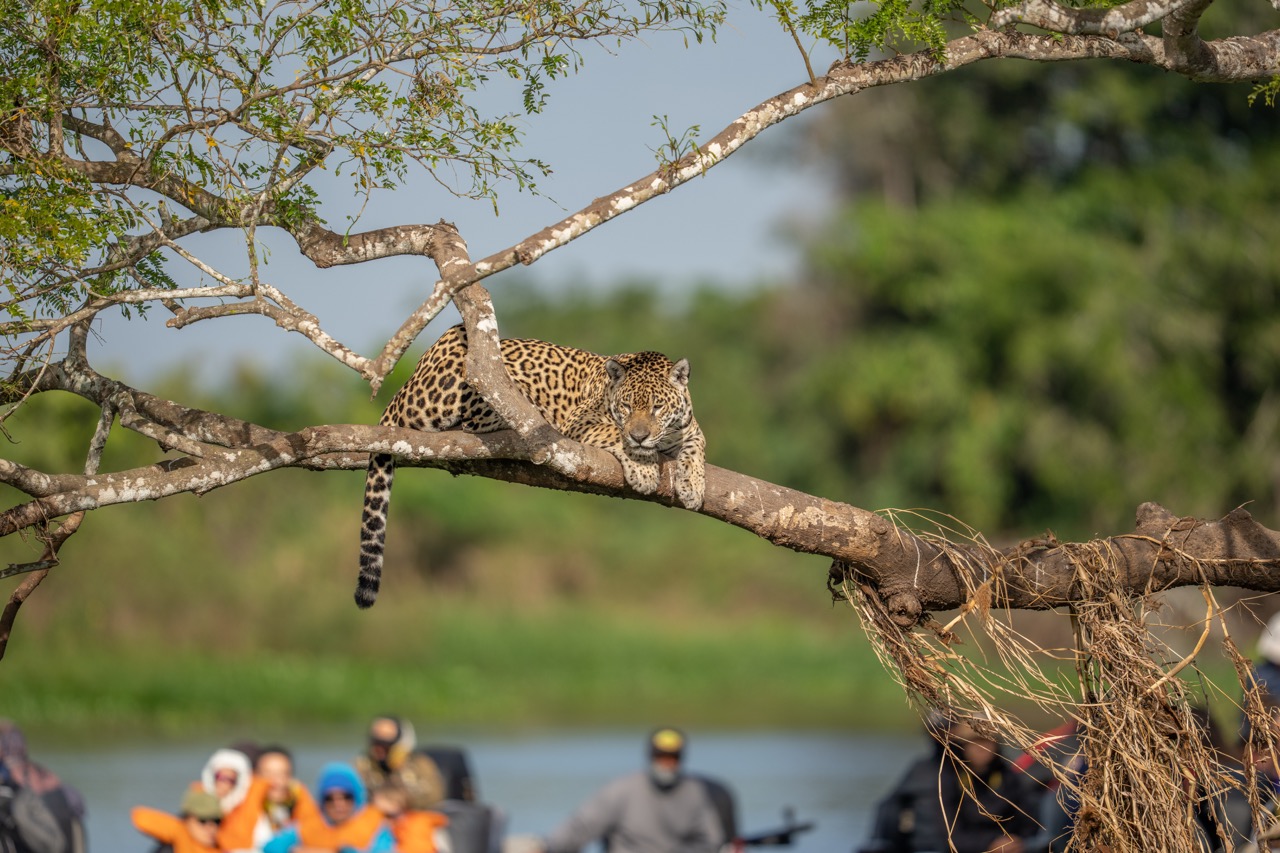
Jaguar Ecology 101: The Predator, the Prey, and the Pulse of the Pantanal
Understanding jaguars isn’t just about watching a big cat move through the river reeds — it’s learning the entire system they shape. Jaguars are architects of the ecosystem, apex predators with ancient instincts, and keystone species whose presence tells us whether a habitat is truly alive.
If you’re planning a jaguar safari in the Pantanal, this is the ecology behind every sighting: the silent conversations between predator and prey, the delicate conservation battles, and the powerful role jaguars play in maintaining balance.
1. Predator–Prey Relationships: How Jaguars Hunt, Choose, and Shape Their World
Jaguars are the most powerful big cats in the Americas, and their hunting strategy reflects it. Unlike lions or cheetahs that run down prey, jaguars specialize in ambush — close-range, explosive hunts using water, vegetation, and silence.
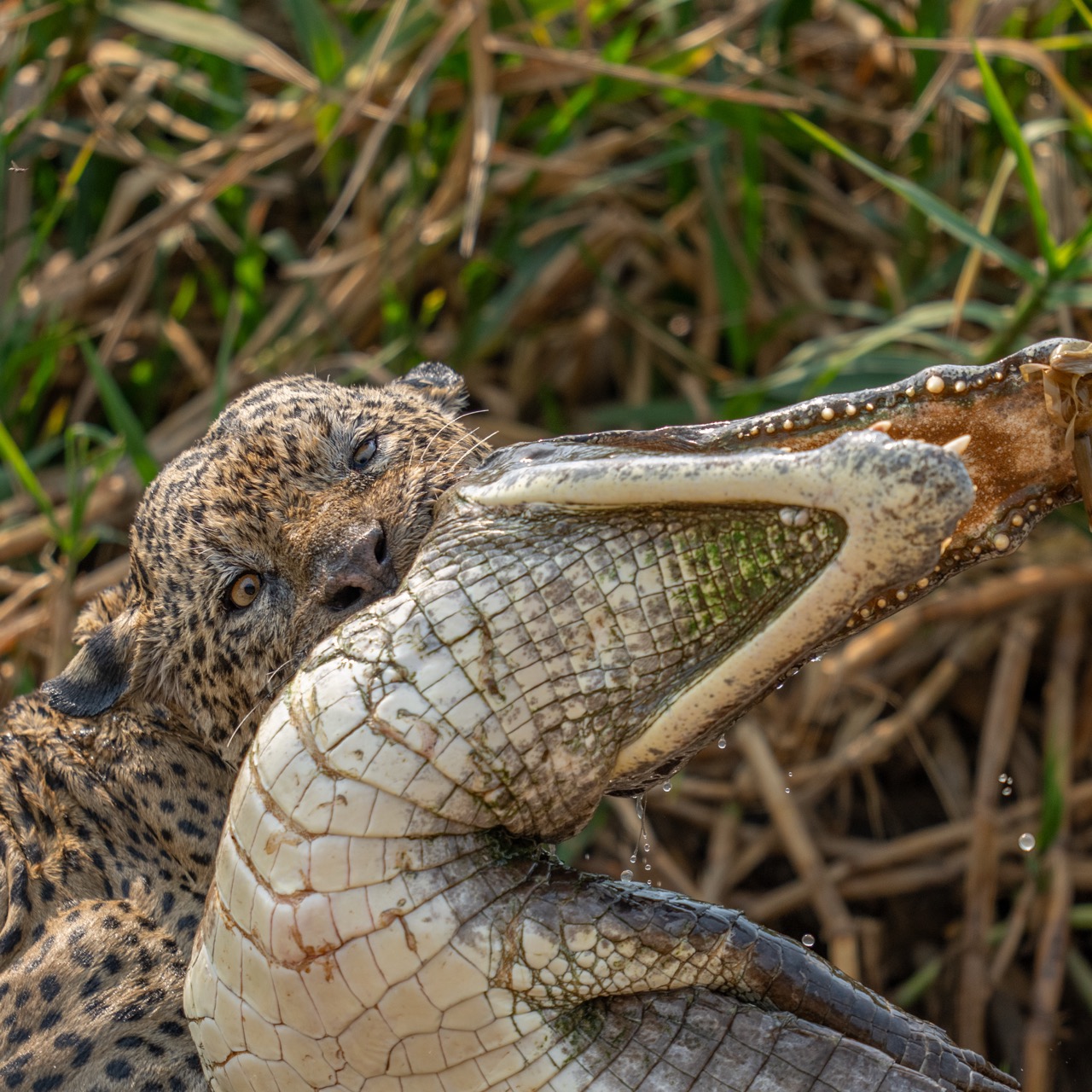
Primary Pantanal Prey
Across the Northern Pantanal where you guide guests, jaguars primarily hunt:
- Caiman — the most iconic predatory relationship in the region. Jaguars perform skull-crushing bites with astonishing precision.
- Capybara — abundant and wary; the cat’s stalking abilities shine here.
- Marsh deer, peccary, giant river turtles, anaconda, and even livestock on ranching borders.
This diverse menu makes the Pantanal one of the best jaguar habitats on Earth. Prey density is high. The rivers support life year-round. And jaguars here show behavior that is rarely observed elsewhere — daytime hunting, swimming between islands, and complex social interactions.
Why Predator-Prey Balance Matters
Healthy prey populations mean:
- Jaguars stay inside protected areas
- Conflict with ranchers decreases
- Genetic diversity remains strong
- Cubs have higher survival rates
Where prey disappears, jaguars don’t vanish — they move. And that movement often brings them into conflict with people.
2. Conservation Status: Where Jaguars Stand Today
Jaguars are currently listed as Near Threatened on the IUCN Red List, but their situation is highly regional.
The Big Picture
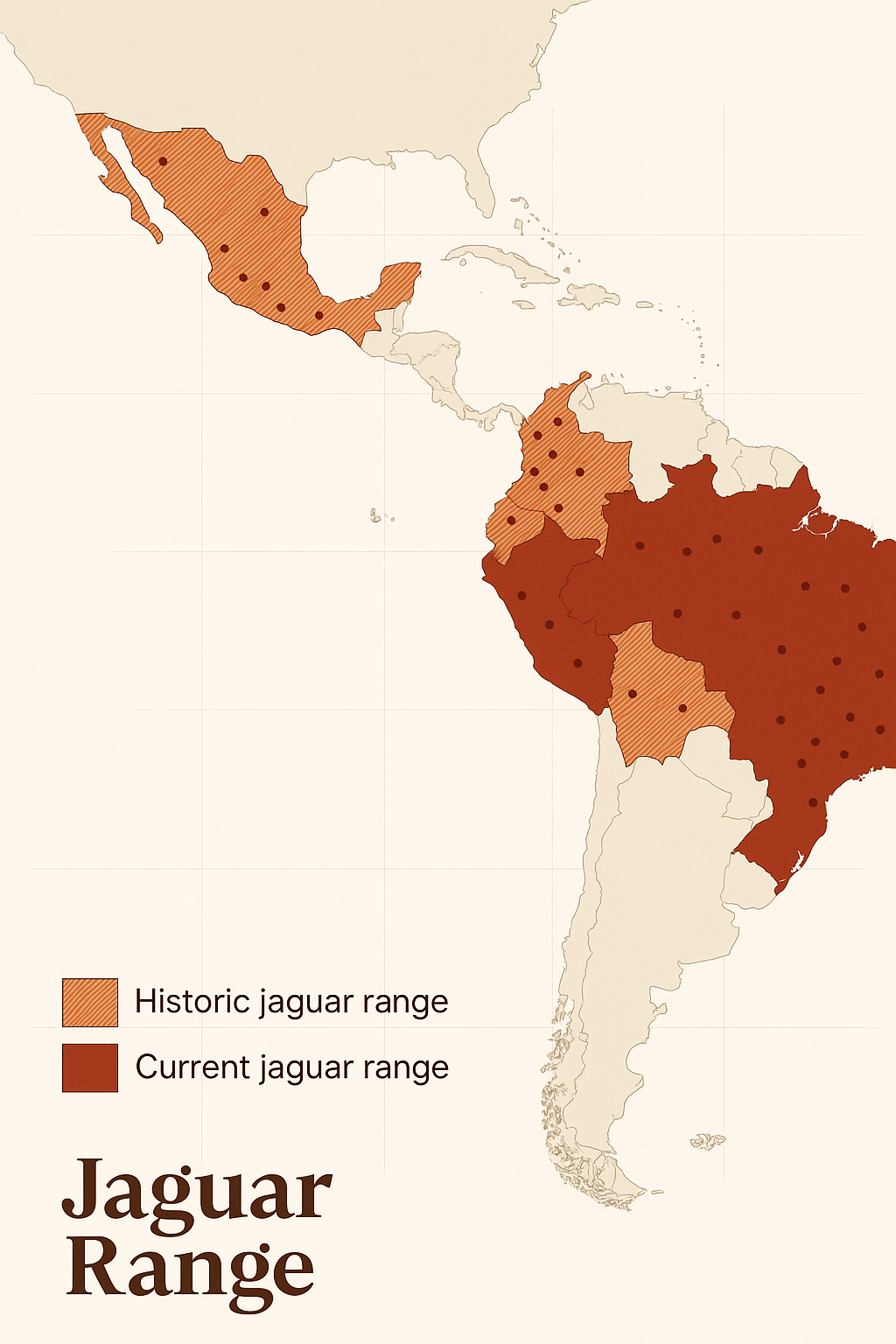
- Jaguars once roamed from California to Argentina.
- Today they occupy just over half of their historical range.
- The Amazon and Pantanal remain strongholds, but Central America is fracturing into isolated pockets.
Primary Threats
- Habitat loss and fragmentation — deforestation pushes jaguars into smaller, disconnected zones.
- Human-wildlife conflict — especially where cattle ranching meets jaguar territory.
- Illegal hunting — both retaliatory and for the illegal wildlife trade.
- Fire — in the Pantanal, megafires in 2020 and 2024 destroyed millions of hectares and impacted jaguar survival.
Why the Pantanal Matters
The Northern Pantanal is home to the densest jaguar population on Earth, making it a lifeboat for the species. Your tours help reinforce its value:
- Tourism increases economic incentive to protect land.
- Local guides and boat pilots become guardians of the species.
- Scientific monitoring thrives with stable funding.
- Ranchers, lodges, and conservation groups align around coexistence.
Guests who visit ethically help ensure jaguars are worth more alive than in conflict.
3. Jaguars as a Keystone Species: The Silent Engineers of the Wetlands
A keystone species is one whose presence shapes the entire ecosystem. Remove it, and the structure collapses.
Jaguars are exactly that.
How Jaguars Shape Their Habitat
- Regulating prey populations prevents overgrazing of plant life.
- Controlling mesopredators like foxes or ocelots supports healthier bird and reptile numbers.
- Maintaining genetic fitness in prey species by removing the sick or weak.
- Influencing riverine behavior by affecting where capybara and caiman feed, which in turn impacts vegetation patterns.
The Cascade Effect
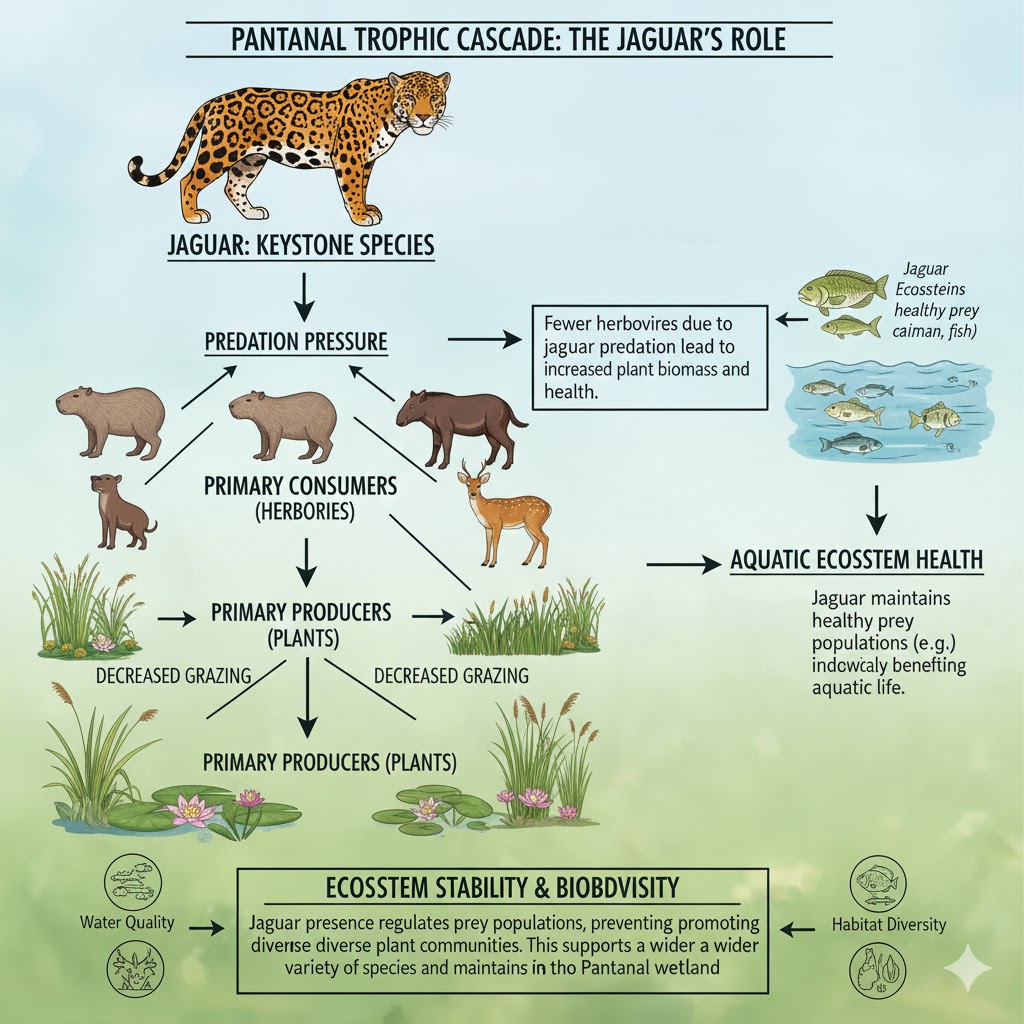
Without jaguars:
- Capybara populations would explode
- Wetland grasses would collapse
- Shorelines would erode
- Bird and fish diversity would plummet
- Caiman behavior would shift, destabilizing the aquatic ecosystem
Jaguars aren’t just beautiful — they’re necessary.
4. Why Understanding Ecology Makes Your Jaguar Safari Better
When guests join a Pantanal expedition, they aren’t just taking photos — they’re stepping into an ancient ecological story:
- Every caiman kill reveals predator-prey evolution.
- Every territory marking tells a chapter in population dynamics.
- Every riverbank sighting is a reminder that conservation worked here.
- Every moment spent watching a relaxed jaguar signals a healthy ecosystem.
The more a guest understands the ecology, the more profound the encounter becomes.
They’re not just witnessing an animal.
They’re witnessing the beating heart of the Pantanal.

Ex-Professional Jockey | Founder @ Journey with Jaguars | Jaguar Safaris, Brazilian Pantanal | Wildlife Photographer | Director @ CLIC Foundation
.png)
Step into the wild
Exclusive trip updates, rare jaguar stories, and insider photography tips - straight to your inbox!